

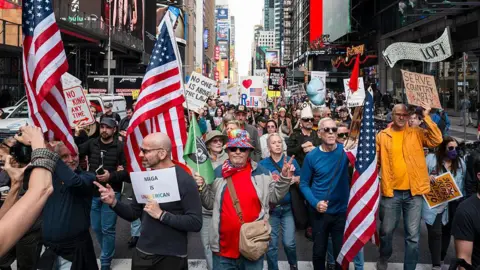
Over the weekend 'No Kings' rallies drew an estimated mass gathering throughout the USA to protest the Trump administration's policies and his readiness to stretch the boundaries of executive power.
This represented a occasion for likeminded liberal voters, liberals and certain anti-Trump Republicans to rally together at a moment when the liberal faction has limited formal power in Washington leadership.
But how should they proceed now?
Massive Turnout Surpasses Anticipations
According to reports, the turnout at the weekend's gatherings - in prominent metropolitan areas like Chicago, NYC, Washington and Los Angeles, as well as countless rural areas – was larger than anticipated and outdid the initial anti-monarchy demonstration in June.
GOP lawmakers had warned that the protests would be 'anti-American', and several conservative governors had positioned their police forces and National Guard on readiness in case of unrest.
The massive gatherings turned out to be calm – a celebration, rather than carnage. In New York City, there were not any demonstration-linked apprehensions, and the convergence in the nation's capital included families and youths.
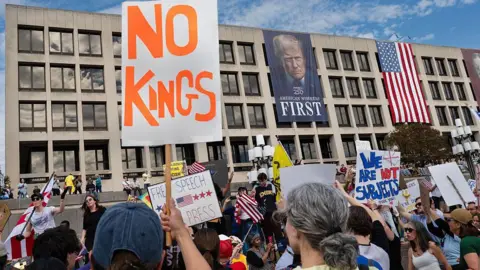
"Today throughout the United States in numbers that could surpass any day of demonstration in our country's past, Americans are proclaiming forcefully and proudly that we are a liberty-loving nation, we are not to be a people that can be controlled, our leadership is not purchasable," a prominent senator announced in his remarks to the capital city rally.
Executive Branch Response and Governmental Implications
In close proximity from the anti-monarchy assembly in the nation's capital, the Trump administration responded to the rallies with mockery.
"Why bother," an administration spokesperson wrote in reply to various media inquiries about the demonstrations.
the commander-in-chief distributed several computer-created videos on his online network of him displaying a crown, including an example where he was flying a aircraft that dumped what appeared to be sewage on the protesters.
Even though Republicans may be downplaying the significance of the marches, the scale of the attendance – along with the president's predominantly negative public support in major opinion polls - suggests a Democratic Party prospect to bounce back from last year's election losses.
Democratic Challenges and Party Splits
The Democratic organization continues to face a significant journey to make progress, nevertheless.
Polls indicate just a third of the public view it favorably - the poorest for many years - and party members are divided over ways to establish an successful challenge to the administration when they lack either chamber of the Capitol.
Liberals demonstrated on the weekend for a diverse motivations. Trump's forceful immigration enforcement, his import taxes, his government cuts, his foreign policy, his deployment of National Guard in metropolitan areas and his tradition-defying use of presidential authority were each regular themes of anxiety and outrage.
A portion of the discontent was furthermore aimed at liberal officials.
"We're just taking it on the chin, and we're failing to protest," an individual protester in Washington DC informed news organizations on during the protests. "You know, I feel we must be more aggressive. Regrettably, the ethical path fails to produce results."
Federal Closure Tactic and Governmental Perils
The Democrats have been more aggressive over the continuing government shutdown, which is approaching its month-long duration. They have been unwilling to endorse a short-term prolongation of present government funding without a cross-party deal to resolve medical coverage support for low-income Americans due to terminate at the year's close.
Because of legislative procedures, liberal lawmakers have limited authority although being in the minority – and, at least so far, the general population seems to be attributing equal if not more blame for the stalemate to the president and the conservative control.
However the strategy carries dangers too. The pain from the impasse – especially for members of the liberal base – is set to worsen as the weeks go by.
Many public servants have been denied salaries and are experiencing financial hardship. Financial support is expected to run out for nutrition assistance. The justice department is cutting back its activities. And the executive branch is using the impasse to order new cuts to the federal workforce and freeze national expenditures, targeting Democratic states and cities.
Forthcoming Votes and Political Prospects
The reality is that party representatives in the Senate will finally have to find a solution of the situation. But they may be struggling to establish terms that the demonstrators who marched on Saturday will approve of.
"If|In case|


